Via Hostel
Project type
Research - Space Design
Client
Sheryl Leysner
Role
UX Designer & Researcher
Timeframe
10 weeks
Via Hostels needed their communal spaces to do more, to feel welcoming to a diverse mix of guests and to actively encourage the kind of spontaneous interaction that makes a hostel stay memorable.
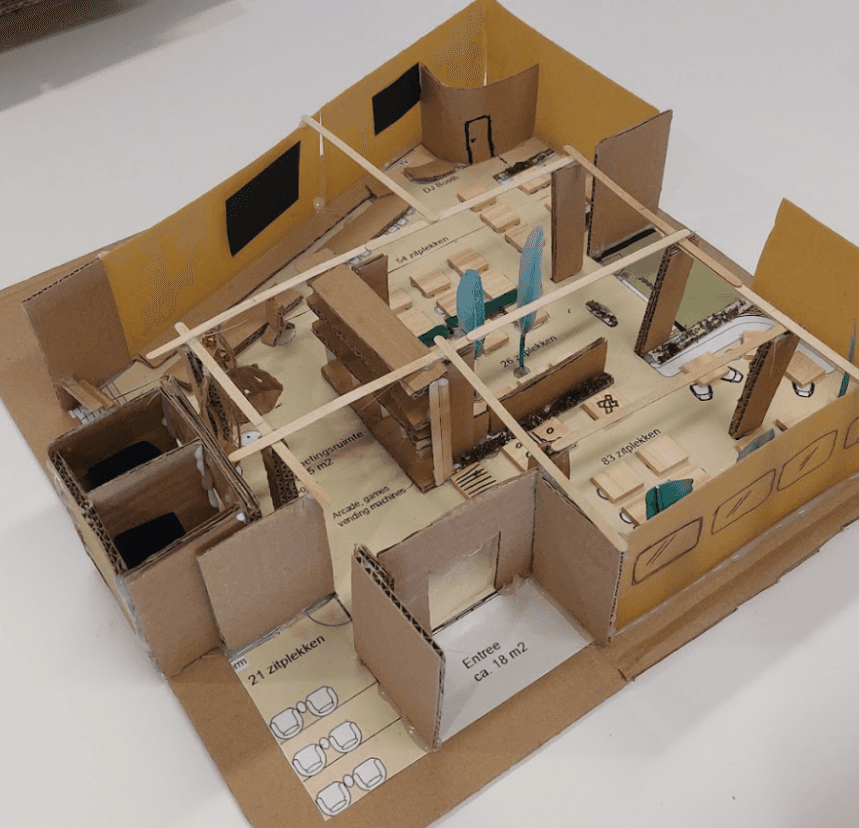
Following the success of Via Hostels Amsterdam, Via was developing a new hostel in Antwerp, transforming a 1975 building into a 70s-inspired space designed by interior designer Sheryl Leysner. Our team was tasked with designing the digital experiences that would bring the concept to life—integrating technology in ways that felt analogue, encouraging social interaction, and supporting Sheryl's vision of creating spaces that make people happy.
Research
With the hostel closed for renovation, we combined observations, interviews, and complementary research methods to understand hostel behaviour. One insight stood out: people's intentions didn't match their actions. Guests who described themselves as social often stayed isolated, while those wanting to meet others rarely initiated conversations.
Rather than asking people to interact directly, they needed a low-pressure, shared trigger that naturally created opportunities to connect. At the same time, the experience had to accommodate both social travellers and guests seeking privacy.
Key Insight
People don't need encouragement to socialize—they need a shared, low-pressure reason to start interacting. Designing for that first moment became the foundation of the experience.


Challanges
VIA Hostels wanted to create a modern hostel experience inspired by the 1970s while staying relevant to today's travelers. The challenge was balancing two seemingly opposing needs, encouraging meaningful social interactions while still supporting guests who value privacy, relaxation, or focused work. We needed to understand what makes people choose hostels, what creates a sense of community, and how digital interactions make a play in all of this.
Process
Many early concepts relied heavily on personal devices or only worked in specific areas of the hostel. The breakthrough came from an unexpected reference: the airport departure board. It naturally draws people together, reflects the shared journey of hostel life, and perfectly matched the ambition of making digital technology feel low-tech.
Through multiple rounds of prototyping and testing, we simplified participation by replacing a QR-based onboarding flow with a tablet beside the display and introduced collaborative interactions that encouraged guests to return beyond their first use.

Final concept
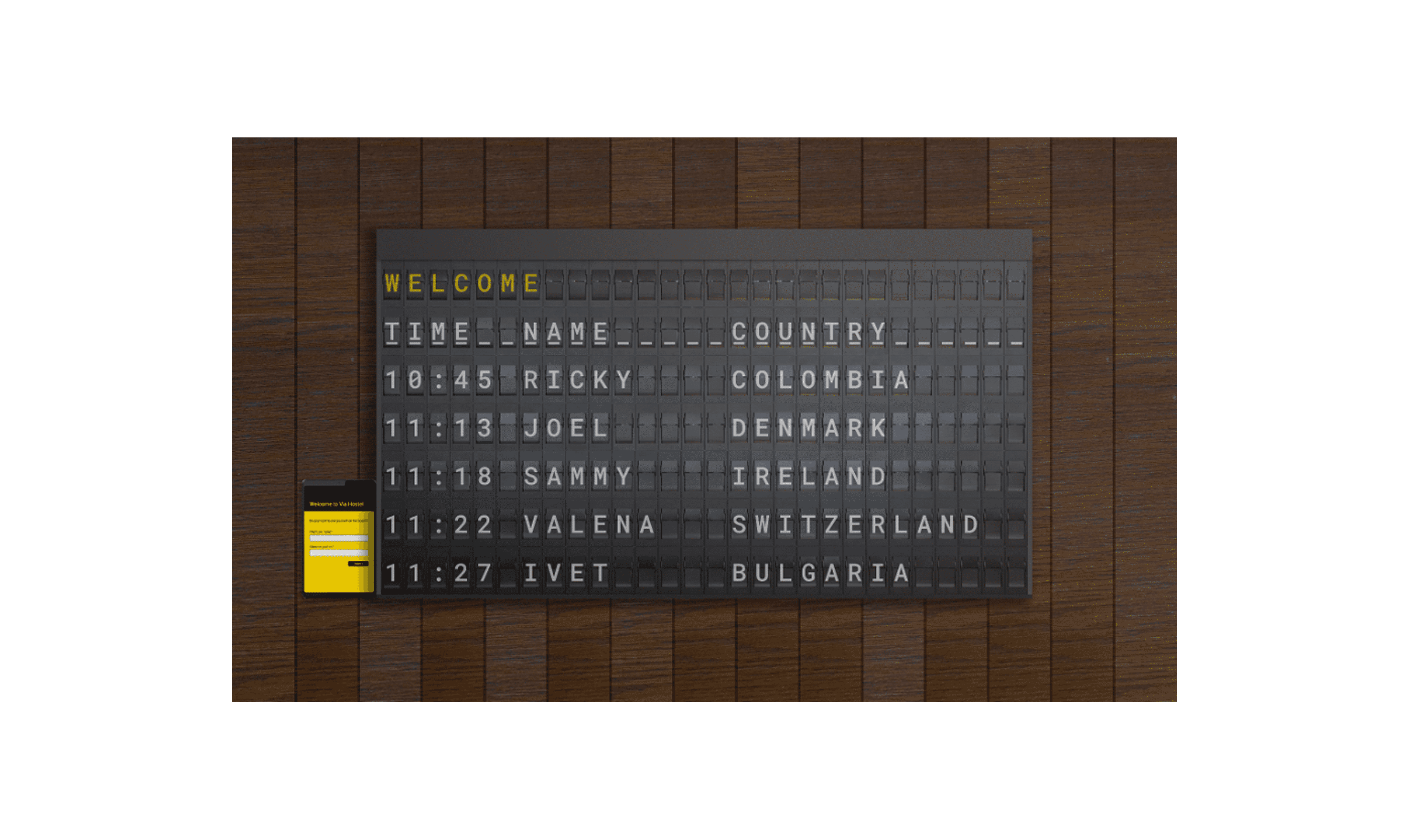
The Arrival Board is a physical flip board installation that operates differently depending on the time of day, shifting the energy of the space as the rhythm of the hostel changes.
During the day, new or existing guests can walk up to a tablet beside the board, type in their name and where they're from, and watch their details flip onto the board. That sound the mechanical clicking of the flip board is the piest de resistance, and one of my favourite details in the whole project. It carries across the room without trying to. Someone who had no intention of looking up does exactly that, and what they see is a live portrait of everyone currently staying, names and cities from all over the world. If they spot somewhere they've been, somewhere they want to go, someone from home they now have a reason to find that person that didn't exist thirty seconds ago. The board doesn't engineer conversation. It gives people something specific enough to act on themselves.
In the evening it becomes a hangman-style game visible to everyone in the space, playable by anyone who picks up the tablet. Referring back to old-school aesthetic as the clients' brief. The mechanic is simple enough that a group of strangers can join mid-game without introduction. Someone starts with a letter, and a room of people who arrived separately find themselves in the middle of something together. When the word is solved, everyone in the space gets a discount at the bar. Each guest also leaves with a personalised printed plane ticket. a small, physical souvenir that travels with them and gives the experience a tangible ending beyond the evening itself.